Production-Grade Multi-Tenant RAG WhatsApp Bot on Oracle Free Tier
Engineer a fully self-hosted, multi-tenant AI assistant for WhatsApp with isolated data and semantic search.
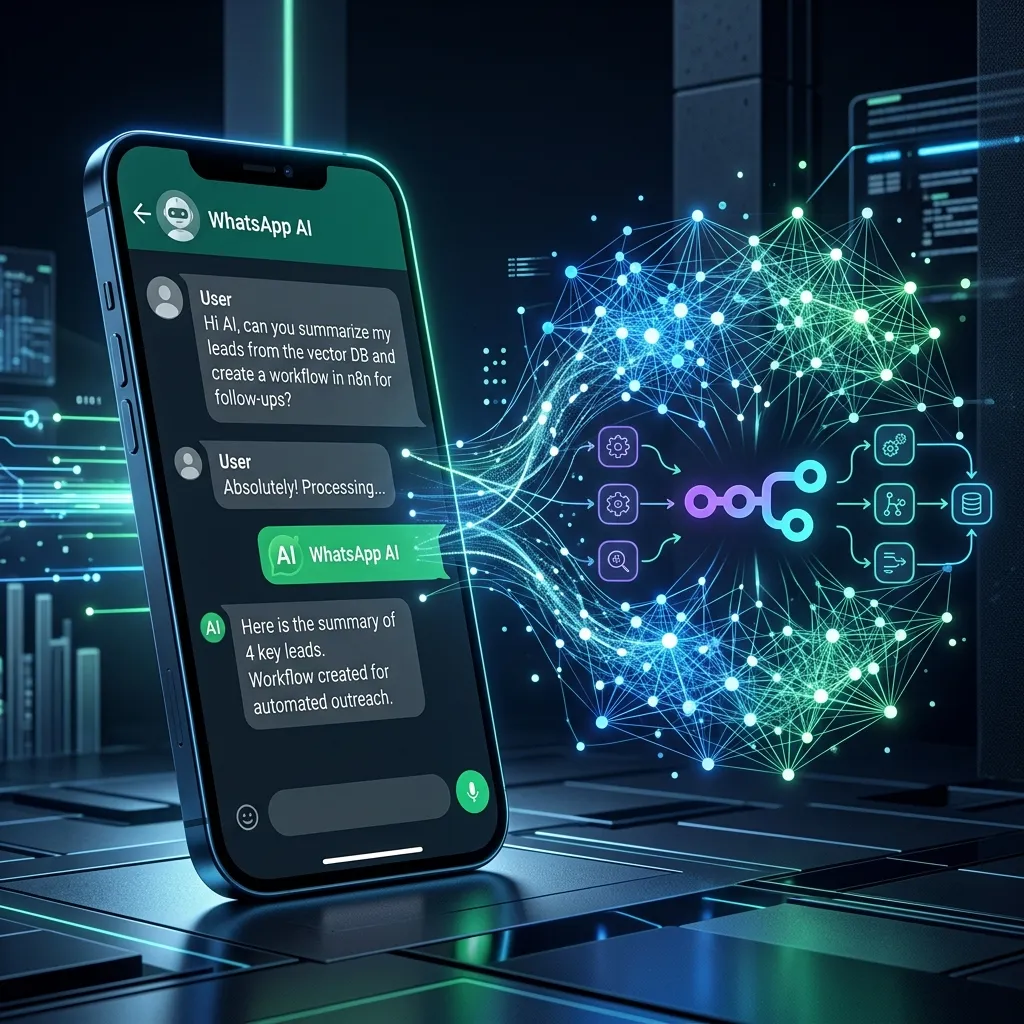
Building a Production-Grade Multi-Tenant RAG WhatsApp Bot on Oracle Free Tier
The Challenge: Zero Budget, Enterprise-Grade Architecture
Most chatbot tutorials show you how to connect two SaaS platforms and call it a day. This project was different — the goal was to engineer a fully self-hosted, multi-tenant AI assistant for WhatsApp that could serve 100+ clients with isolated data, semantic search, and intelligent guardrails, running entirely on Oracle Cloud’s free ARM64 instance.
The constraints were real: 50GB shared disk, no managed databases, no paid proxies, and a LiteSpeed web server that had opinions of its own.
Phase 1: Taming LiteSpeed — The WebSocket Compression Problem
The Problem: After deploying n8n behind LiteSpeed via CyberPanel, the editor loaded fine — but executing any workflow caused an immediate crash. The logs revealed: Invalid WebSocket frame: RSV1 must be clear. LiteSpeed was silently injecting permessage-deflate compression into WebSocket frames, corrupting them before they reached n8n.
The Solution: Disabling gzip at the VHost level (enableGzip 0, enableBr 0) wasn’t enough — LiteSpeed was negotiating compression at the WebSocket handshake layer independently. The fix required switching n8n’s push backend from WebSocket to SSE (N8N_PUSH_BACKEND=sse) and introducing an nginx sidecar container that forced the correct headers before traffic reached n8n.
The Insight: Reverse proxies don’t just route traffic — they actively transform it. When a proxy sits between a WebSocket server and a client, every header, every extension negotiation, every frame bit becomes a potential point of failure.
Phase 2: The Origin Header Mystery
The Problem: After switching to SSE, a new error appeared: Origin header does NOT match the expected origin. Expected: "undefined". n8n’s security layer was rejecting all push connections because it couldn’t determine its own origin — rendering the editor unusable for workflow execution.
The Deep Dive: Using tcpdump on the loopback interface confirmed the Origin header was arriving correctly at port 5678. The real issue was a nested directory problem: N8N_USER_FOLDER and HOME environment variables were compounding, creating a ~/.n8n/.n8n/config path that n8n never read. The editorBaseUrl was never loaded, so n8n’s expected origin was literally undefined.
The Solution: Remapping the Docker volume directly to /home/node/.n8n — n8n’s canonical default path — and removing the conflicting HOME variable. The nginx sidecar injected Origin: https://n8n.domain.com as a static header, bypassing the proxy stripping entirely.
The Insight: Container path nesting is a silent killer. When HOME and a custom folder variable both resolve to the same base, you get infinite directory recursion that no error message will explain clearly.
Phase 3: Python in a Distroless Container
The Problem: n8n’s latest image is distroless — no shell, no package manager, no Python. Enabling the Python task runner returned: Virtual environment is missing from this system. Standard approaches (copying Alpine binaries, using glibc builds) failed due to library incompatibilities on ARM64.
The Deep Dive: By reading n8n’s compiled source (task-runner-process-py.js), the exact expected venv path was located: /usr/local/lib/node_modules/@n8n/task-runner-python/.venv/bin/python. The src/ directory containing the runner’s Python code wasn’t in the distroless image at all — it had to be cloned from the n8n GitHub repository at the matching version tag.
The Solution: A three-stage Dockerfile — Alpine Python builder for the venv, Node.js for cloning the runner source, and the n8n distroless base as the final stage. Libraries like libpython3.12.so and libffi.so.8 were copied individually with proper symlinks.
The Insight: Distroless images are secure by design — but that security means you must understand exactly what your dependencies need at the binary level, not just the package level.
Phase 4: Building the RAG Pipeline
The Architecture:
PDF/CSV Upload → Python Extraction → Word-aware Chunking →
OpenAI Embeddings (batch) → Upstash Vector → PostgreSQL Control Table
Key Engineering Decisions:
File extraction without base64: n8n stores uploaded files as filesystem-v2 references, not in-memory base64. The Python node reads directly from /home/node/.n8n/binaryData/ using the UUID from the file reference — bypassing the broken base64 pipeline entirely.
Word-aware chunking: Character-based chunking with overlap produced fragments like "ico." — the tail end of a word split across boundaries. Switching to word-boundary chunking with a minimum chunk size filter (50 chars) eliminated orphaned fragments entirely.
SHA-256 deduplication: Each uploaded file is hashed before processing. A PostgreSQL control table (rag_files) stores the hash per instance_id + filename. On re-upload, if the hash matches, the entire embedding pipeline is skipped — zero wasted API calls.
Batch upsert to Upstash: 1536-dimension vectors at 20 vectors per request exceeded Upstash’s payload limit. The JavaScript node batches into groups of 5, sending the array as raw JSON body — Using Fields Below mode wraps the payload in an extra object that Upstash rejects.
The Insight: Vector databases have strict payload size limits that aren’t always documented clearly. Always calculate your payload size (dimensions × 4 bytes × batch_size) before assuming a batch size is safe.
Phase 5: Multi-Tenant Query Pipeline
The Architecture:
WhatsApp Message → Embed Query → Upstash Semantic Search (filter: instance_id) →
Context Injection → AI Agent → Response
Each client’s vectors are tagged with instance_id in metadata. Upstash’s SQL-like filter syntax ("filter": "instance_id = 'PixelPages_Prueba'") ensures complete data isolation at query time — one index, 100 clients, zero cross-contamination.
The system prompt template in Airtable uses {{ $json.variable }} placeholders that a JavaScript node resolves before passing to the AI Agent — making the entire agent persona, RAG context, and business rules configurable per client without touching the workflow.
Phase 6: WhatsApp Media Decryption
The Problem: WhatsApp encrypts all media with AES-256. The media_key URL returned by Evolution API is an .enc file — unreadable without decryption. The Analyze Image node in n8n couldn’t process base64 data URLs, and the OpenAI node’s URL mode doesn’t support data URLs either.
The Solution: Evolution API’s /chat/getBase64FromMediaMessage endpoint handles decryption server-side, returning clean base64. A JavaScript node constructs the data URL (data:${mimetype};base64,${clean_base64}) and passes it directly to a raw OpenAI HTTP Request node — bypassing n8n’s native node limitations entirely.
For audio: The base64 OGG is converted to a binary attachment in-memory within the n8n execution context, consumed by Whisper, and the transcription flows into the same RAG pipeline as text messages.
Phase 7: Intelligent Guardrails
Four validation layers execute before any AI processing:
-
Timestamp Guard: Messages older than 4 hours are silently dropped — prevents Evolution API retry storms from flooding the pipeline when n8n restarts.
-
Pause Guard: A PostgreSQL table (
bot_pauses) tracks per-conversation pause states. Users send/pause 24(embedded anywhere in a message) to silence the bot for N hours on their specificremote_jid. The command is detected via regex, stripped from the message, and the conversation continues transparently. -
Exclusion Guard: Airtable stores excluded phone numbers per instance. A
FIND()filter performs a contains-match on the last 10 digits of theremote_jid— making it country-code agnostic without hardcoding any country prefixes. -
Relevance Guard: A
gpt-4o-minicall (~$0.000007 per message) classifies whether the incoming message is relevant to the business context before triggering the full RAG pipeline. Irrelevant messages receive a polite deflection. Cost at 10,000 messages/month: ~$0.07.
The Stack
| Layer | Technology | Cost |
|---|---|---|
| VPS | Oracle Cloud ARM64 (4 vCPU, 24GB RAM) | $0 |
| Orchestration | n8n (self-hosted Docker) | $0 |
| Web Server | LiteSpeed via CyberPanel | $0 |
| Reverse Proxy | nginx sidecar | $0 |
| Vector DB | Upstash Vector | $0 |
| Logs DB | Turso (per-tenant SQLite) | $4.99/mo |
| Config Store | Airtable | $0 |
| Control DB | PostgreSQL (self-hosted) | $0 |
| AI | OpenAI GPT-4o + Whisper + Embeddings | Usage |
| Evolution API (self-hosted) | $0 |
Total fixed infrastructure cost: ~$5/month for 100 clients.
Key Takeaways
- Self-hosting is not cheaper than managed services in time — but it builds understanding that managed services actively hide from you.
- Reading compiled JavaScript source code to find undocumented internal paths is a legitimate debugging strategy.
- Every proxy layer is a transformation layer. Treat it that way.
- The difference between a demo and a production system is the guardrails, not the AI model.